Uganda’s healthcare system supports millions of people every year through a mix of national referral hospitals, regional hospitals, faith-based facilities, and private hospitals. From emergency stabilization and maternity services to surgery, diagnostics, cancer care support, and rehabilitation planning, hospitals in Uganda serve local communities and visitors who need reliable care pathways and clear next steps.
Whether you are researching treatment options, planning care for a loved one, or exploring Uganda as a medical travel option within East Africa, this guide provides clear, practical, and patient-friendly insights. It explains how the hospital system works, what treatments are commonly available, how referrals and follow-up care typically happen, and how to compare hospitals for your needs.
Patients who want peer-to-peer insight before making decisions can visit the MyHospitalNow community forum at
https://www.myhospitalnow.com/forum/
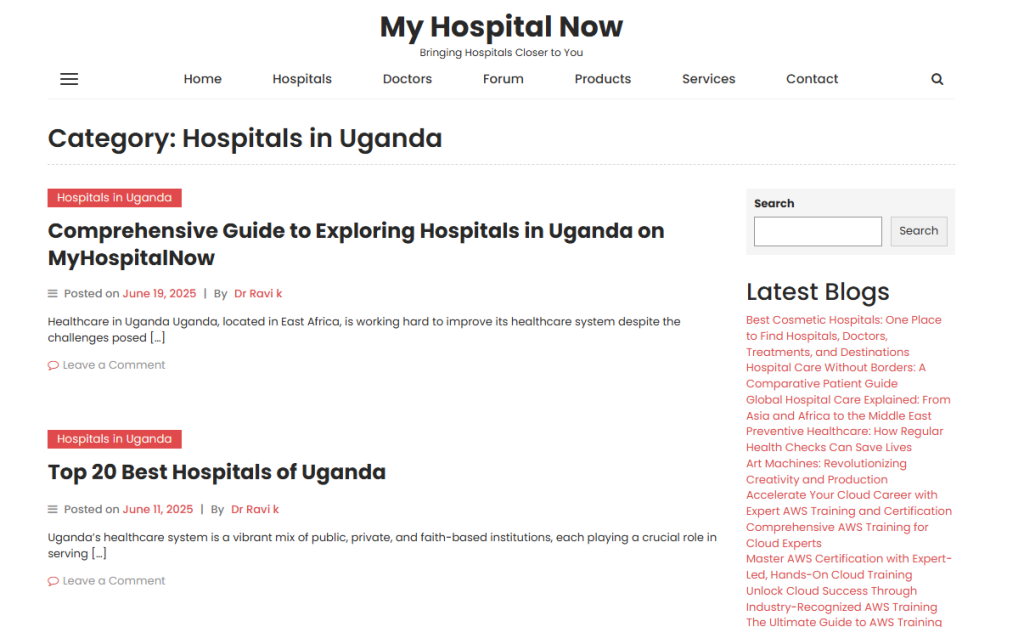
For country-specific hospital guidance, explore the hospitals in Uganda section at
https://www.myhospitalnow.com/blog/category/hospitals-in-uganda/
How Uganda’s Hospital System Works
Uganda’s hospital network is structured around different levels of care:
- National referral hospitals handle complex cases, advanced diagnostics, and specialized departments.
- Regional referral hospitals serve large areas with surgery, medicine, maternity care, and referrals upward when needed.
- District hospitals and health centres manage common conditions, stabilization, and follow-up.
- Private and faith-based hospitals often provide strong maternity services, elective surgery, diagnostics, and outpatient specialist clinics, sometimes with faster scheduling.
Key characteristics of the system include:
- Emergency and essential care widely available in public facilities
- Specialist services more concentrated in major cities and referral centres
- Strong role of faith-based hospitals in maternity and general medicine
- Referral pathways used for complex surgery, intensive care, or specialist treatment
- Increasing use of structured diagnostics and follow-up planning in larger facilities
For patients, the most important planning step is understanding where your condition fits—routine care, urgent stabilization, or specialist-level evaluation.
Treatments and Services Offered in Uganda Hospitals
Hospitals in Uganda provide a wide range of treatments, with service depth varying by facility type and location. Major referral hospitals and leading private facilities tend to offer broader specialist coverage and stronger diagnostics.
| Treatment Area | Services Included | Why It Matters |
|---|---|---|
| Emergency Medicine | Stabilization, trauma response, urgent care | Fast care can prevent complications |
| General Surgery | Appendectomy, hernia repair, wound care | Common surgical needs handled locally |
| Obstetrics & Gynecology | Antenatal care, delivery, C-section support | Maternal and newborn safety priority |
| Pediatrics | Child illness care, inpatient support | Essential for family health decisions |
| Internal Medicine | Diabetes, hypertension, infections | Supports long-term and acute care |
| Oncology Support | Cancer evaluation, chemo coordination, follow-up | Helps patients plan treatment pathways |
| Cardiology Services | ECG, echo access, heart risk management | Early evaluation reduces long-term risk |
| Diagnostics | Lab testing, ultrasound, X-ray, some CT/MRI access | Guides accurate treatment planning |
| Rehabilitation | Physiotherapy, post-surgery recovery support | Improves mobility and quality of life |
If you’re comparing hospitals in Uganda, ask about diagnostic capacity, surgical readiness, blood bank availability, ICU support, and follow-up planning—these often make the biggest difference in outcomes and patient experience.
10 Hospitals in Uganda: Comparison Table for Patients
| Hospital Name | Location | Beds (Approx.) | Key Specializations | Doctor Count (Approx.) |
|---|---|---|---|---|
| Mulago National Referral Hospital | Kampala | 1,500+ | Emergency, Surgery, Complex Care | 1,000+ |
| Uganda Heart Institute (Specialist Centre) | Kampala | 200+ | Cardiology, Heart Procedures, Rehab | 200+ |
| Mengo Hospital | Kampala | 300+ | General Medicine, Surgery, Maternity | 200+ |
| Nsambya Hospital | Kampala | 400+ | Surgery, Women’s Health, Diagnostics | 300+ |
| Rubaga Hospital | Kampala | 250+ | Internal Medicine, Surgery, Maternity | 180+ |
| St. Mary’s Hospital Lacor | Gulu | 500+ | Surgery, Pediatrics, General Care | 250+ |
| Mbarara Regional Referral Hospital | Mbarara | 600+ | Emergency, Surgery, Internal Medicine | 350+ |
| Mbale Regional Referral Hospital | Mbale | 500+ | Maternity, Surgery, Medicine | 280+ |
| Jinja Regional Referral Hospital | Jinja | 400+ | Emergency, Surgery, General Care | 220+ |
| Fort Portal Regional Referral Hospital | Fort Portal | 350+ | General Medicine, Maternity, Surgery | 200+ |
Figures are indicative and intended to support early patient understanding when official facility-level details are not provided.
For more country-specific hospital content, visit
https://www.myhospitalnow.com/blog/category/hospitals-in-uganda/
Real Patient Story: Confidence Through Better Preparation
Grace, a 38-year-old mother, needed evaluation for persistent fatigue and dizziness. She worried it could be anemia or a heart-related issue, but she felt unsure about where to start and what tests to request. She also feared wasting time moving between facilities without a clear plan.
Before her hospital visit, she read patient discussions on the MyHospitalNow forum. People shared what symptoms they documented, how they prepared questions, and how they navigated lab testing and follow-up appointments.
“Reading other patients’ experiences helped me describe my symptoms clearly and ask better questions,” she said. “I felt more confident during the consultation and understood the next steps.”
Patients and caregivers looking for similar peer guidance can visit
https://www.myhospitalnow.com/forum/
Why Patients Choose Hospitals in Uganda
Patients and families often rely on hospitals in Uganda because:
- Referral hospitals provide essential and complex care pathways
- Strong maternity and child health services are widely available
- Faith-based and private hospitals may offer structured outpatient services
- Diagnostic and surgical services are accessible in many regions
- Regional referral hospitals reduce the need for long-distance travel for basic specialist care
For many people, the best outcome comes from choosing the right level of hospital early, then following a clear referral and follow-up plan.
Public vs Private Hospitals in Uganda
| Feature | Public / Referral Hospitals | Private / Faith-Based Hospitals |
|---|---|---|
| Cost Structure | Often subsidized, structured fees | Fee-based, sometimes insurance-supported |
| Wait Times | Standard scheduling, higher patient volume | Often faster for outpatient and elective care |
| Service Focus | Emergency, inpatient, broad essential care | Elective procedures, outpatient coordination |
| Best For | Complex care, emergencies, referrals | Planned consultations and scheduled treatments |
| Patient Experience | High-volume, structured | More personalized appointment flow |
Both systems play important roles. The best choice depends on urgency, complexity, availability of specialists, and your need for structured follow-up.
Practical Tips for Patients Planning Care
- Bring medical history, prescriptions, and any past test reports.
- Write down symptoms clearly: when they started, frequency, and triggers.
- Ask what tests are needed and what results will change in the treatment plan.
- Clarify the follow-up timeline before leaving the hospital.
- If referral care is likely, ask the care team how transfers and specialist appointments are coordinated.
- Use peer insight to reduce stress and prepare better questions.
For patient questions and shared experiences, visit
https://www.myhospitalnow.com/forum/
Frequently Asked Questions (FAQs)
- Are hospitals in Uganda able to manage emergencies?
Yes, major referral and regional hospitals provide emergency stabilization and urgent care. - Where is specialist care most available?
Specialist services are more concentrated in Kampala and regional referral hospitals. - Do hospitals provide maternity and newborn care?
Yes, maternity services are widely available, including emergency obstetric support in major facilities. - Are diagnostic tests available?
Lab tests and imaging such as ultrasound and X-ray are common; advanced imaging availability varies by facility. - Can patients access surgery locally?
Yes, many hospitals provide general surgery, while complex cases may require referral centres. - Is cancer care available in Uganda?
Evaluation and treatment coordination are available; patients may be referred to specialized centres depending on needs. - Are rehabilitation services available after surgery?
Many facilities coordinate physiotherapy and recovery planning, especially in larger hospitals. - Can family members support patients during care?
Family involvement is commonly supported, depending on space and hospital policy. - What should I bring for a hospital visit?
Identification, medical records, medication list, and a written list of questions. - Where can I learn from other patients before visiting?
You can use the MyHospitalNow forum at https://www.myhospitalnow.com/forum/
Conclusion: Make Healthcare Decisions with Clarity and Support
Hospitals in Uganda provide essential emergency care, maternity services, diagnostics, surgery, and specialist referral pathways across the country. Whether you are planning a consultation, managing a chronic condition, or seeking specialist evaluation, informed preparation helps you feel calmer and improves decision-making at every step.
If you want real patient insight, shared experiences, and community support before making decisions, visit the MyHospitalNow forum at
https://www.myhospitalnow.com/forum/
For ongoing country-specific guidance and hospital research, explore
https://www.myhospitalnow.com/blog/category/hospitals-in-uganda/
Your healthcare journey deserves clarity, confidence, and support—and MyHospitalNow is here to guide you every step of the way.