
Introduction
Neck pain is a common health issue that affects millions of people across all age groups in their daily lives. The cervical spine forms the upper part of your backbone, supporting the weight of your head (which weighs roughly 10 to 12 pounds) and allowing you to turn, tilt, and bend your neck smoothly in multiple directions. Neck discomfort can develop from simple daily habits like poor sitting posture and muscle strain, as well as age-related joint changes, sudden trauma injuries, or specific structural spine conditions.
Because the root cause of pain varies significantly from person to person, learning how your neck works can help you make smart choices for your health. Paying close attention to your symptoms will help you recognize when home remedies are enough and when it is time to seek professional advice from a doctor.
Understanding the Cervical Spine
The cervical spine is a remarkably flexible yet delicate structure located inside your neck. It consists of seven small, stacked bones called vertebrae, labeled C1 through C7. The top two vertebrae, named the atlas (C1) and axis (C2), have specialized shapes that allow your head to rotate from side to side and nod up and down.
Rubber-like cushions called intervertebral discs sit between each pair of vertebrae. These discs feature a tough outer ring surrounding a gel-like center, acting as shock absorbers to handle pressure during daily movement. Strong muscles, tendons, and ligaments wrap around the bones to support head weight and stabilize the joints.
Eight pairs of critical nerve roots branch out from the spinal cord in the neck, passing through small bone openings to send signal pathways down into your shoulders, chest, arms, and fingers. Together, these complex parts protect your delicate spinal cord while providing your head with a wide range of motion.
Common Causes of Neck Pain
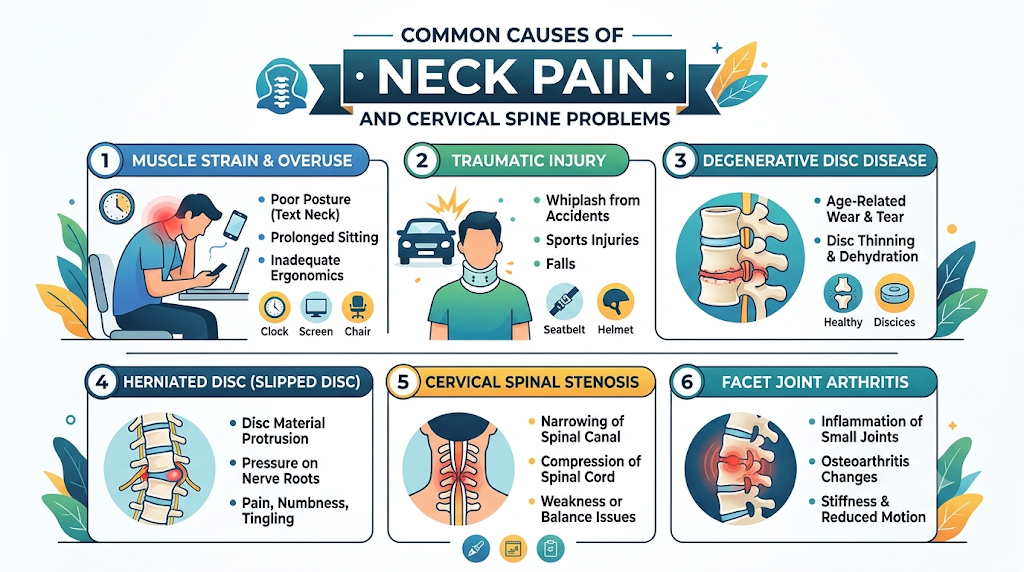
Neck pain can start suddenly following a swift movement or build up gradually over months of subtle strain. Understanding everyday causes helps you identify what might be triggering your discomfort.
Muscle Strain
Lifting heavy objects incorrectly or turning your head too fast can stretch or micro-tear neck muscle fibers. Staying in an awkward position for extended periods, such as holding a phone against your shoulder, also causes painful muscle soreness and spasms.
Poor Posture
Slouching in a chair or leaning forward toward a desk places immense physical strain on your neck joints. For every inch your head tilts forward, the extra weight felt by your cervical spine increases by about 10 pounds, fatiguing the surrounding muscles and ligaments over time.
Long Screen Time
Looking down constantly at mobile phones, tablets, or low laptop monitors causes a modern repetitive strain condition known as text neck. Bending your neck downward at a steep angle places up to 60 pounds of pressure on your upper spine.
Sleeping Position
Using a pillow that is too high, too firm, or too flat can force your cervical spine into an unnatural angle all night. Sleeping on your stomach forces your neck to stay rotated to one side for hours, leading to severe morning neck stiffness.
Stress and Muscle Tension
When you experience high levels of mental stress or anxiety, your body naturally tightens its shoulder, upper back, and neck muscles without you realizing it. This continuous muscle contraction reduces local blood flow, leading to chronic stiffness and aching pain.
Age-Related Changes
As the body ages naturally, spinal discs lose their water content, become thinner, and lose flexibility. The facet joints connecting the vertebrae also experience natural wear, which can make the neck feel stiff, noisy, or sore after daily activity.
Common Cervical Spine Problems
When structural elements of the neck wear down or get injured, specific medical conditions can develop that affect the bones, discs, and nerves inside the cervical spine.
Cervical Spondylosis
Cervical spondylosis is an age-related wear-and-tear condition that affects the neck joints, bones, and discs, similar to osteoarthritis. Over time, bone spurs (extra bone growths) may form around the joints. Many people have no pain, while others feel chronic stiffness, grinding sensations, or dull aches.
Cervical Disc Herniation
Spinal discs have a soft, jelly-like inner center protected by a tough outer ring. A herniated disc—sometimes called a slipped or ruptured disc—occurs when the inner material pushes through a tear in the outer layer, where it can press directly against nearby sensitive spinal nerves.
Cervical Spinal Stenosis
Cervical spinal stenosis happens when the main central canal housing the spinal cord grows narrower due to bone spurs, thickened ligaments, or bulging discs. This narrowing squeezes the spinal cord or nerve roots, potentially causing widespread numbness, balance issues, or limb weakness.
Cervical Radiculopathy
Cervical radiculopathy, commonly called a pinched nerve, develops when a nerve root leaving the spinal cord becomes compressed or inflamed. It causes sharp, electric-like pain, burning sensations, numbness, or tingling that travels down through the shoulder, arm, or fingers along the nerve pathway.
Muscle and Ligament Injuries
Sudden forceful impacts during contact sports, heavy physical work, or unexpected falls can overstretch or tear soft neck tissues. These sprains and strains lead to localized swelling, tenderness, muscle guarding, and sharp pain during head movement.
Whiplash Injury
Whiplash happens when a sudden force jerks your head violently backward and then forward, like the cracking of a whip. This rapid motion commonly occurs during rear-end car accidents, straining the neck muscles, tendons, discs, and joint ligaments beyond their normal limits.
Daily Habits That May Increase Neck Pain
Everyday habits and workplace setups can add constant, unnecessary pressure to your cervical spine over time.
- Sitting for long hours without taking standing or walking breaks.
- Looking down continuously at your mobile phone or tablet screen.
- Working on a laptop computer positioned far below your eye level.
- Sitting in non-ergonomic office chairs that lack proper back and neck support.
- Carrying heavy backpacks, purses, or laptop bags over just one shoulder.
- Sleeping on an unsupportive mattress or using an worn-out pillow.
- Repeating the same head-turning movements continuously during work tasks.
- Avoiding regular physical exercise, which weakens the neck-supporting core muscles.
Common Causes and Their Possible Signs
| Common Cause | Possible Signs | General Explanation |
|---|---|---|
| Muscle strain | Pain, localized soreness, and stiffness | Neck muscles become sore and tight after sudden movements, heavy lifting, or poor sleep positions. |
| Poor posture | Neck, upper back, and shoulder discomfort | Staying in awkward sitting or slouched positions increases strain on supporting soft tissues. |
| Cervical spondylosis | Chronic stiffness, crepitus, and dull pain | Age-related wear and tear affects the spinal facet joints, discs, and surrounding bone structures. |
| Disc herniation | Sharp neck pain or radiating arm symptoms | A bulging or slipped disc presses on a nearby spinal nerve root, causing localized or distant pain. |
| Cervical stenosis | Pain, numbness, weakness, balance issues | Narrowing of central spinal spaces places continuous pressure on the nerve pathways or spinal cord. |
| Whiplash injury | Acute pain, headache, and reduced movement | Sudden, rapid backward and forward head movements stretch and strain internal neck tissues. |
Common Symptoms of Cervical Spine Problems
Symptoms of neck problems can range from mild, annoying aches to severe pain that limits your ability to work or sleep. You might experience a tight, stiff neck that makes turning your head to check your shoulder while driving difficult.
Some people feel deep discomfort spreading into their shoulder blades, upper back, or chest. When nerves in the neck become irritated or compressed, you may feel tingling, pins-and-needles, or total numbness traveling down your arm into your fingers.
You may also notice muscle weakness, such as dropping objects unexpectedly or struggling to button a shirt. Tension headaches that start at the base of your skull and travel over the top of your head are also very common with upper neck strain.
Difference Between Common Neck Pain and Cervical Spine Problems
| Point | Common Neck Pain | Cervical Spine Problems |
|---|---|---|
| Possible cause | Temporary muscle strain, overuse, or poor posture | Underlying disc herniation, joint wear, bone spurs, or nerve compression |
| Symptoms | Short-term localized pain and stiffness in the neck | Deep pain, tingling, numbness, radiating arm pain, or muscle weakness |
| Duration | Often improves within a few days or weeks with simple care | May persist for months or worsen over time based on the underlying condition |
| Diagnosis | Simple clinical check and history review by a doctor | Physical exam accompanied by diagnostic imaging scans (X-rays, MRI) |
| Treatment | Posture fixes, short rest, heat/ice, and activity changes | Specialized medical care, targeted physical therapy, or spinal procedures |
Warning Signs That Need Medical Attention
While most cases of neck pain resolve gradually with self-care, certain red-flag symptoms require prompt medical evaluation by a physician. Seek immediate emergency care if your neck pain develops right after a car crash, diving accident, fall, or sudden impact to the head.
Get an urgent checkup if you notice new, progressive weakness in your arms, hands, or legs, such as trouble lifting your arm or gripping items. Difficulty walking, loss of physical balance, or sudden clumsiness in your legs also points to possible spinal cord pressure.
A sudden loss of bowel or bladder control combined with neck pain is a serious medical emergency called myelopathy that requires immediate attention. You should also consult a doctor quickly if your neck pain is accompanied by a high fever, severe unexplained headache, chills, unexplained weight loss, or night sweats.
Risk Factors for Neck Pain and Cervical Spine Problems
Certain health conditions and lifestyle choices can increase your likelihood of experiencing neck pain and cervical spine issues.
- Getting older, which naturally reduces moisture in spinal discs and wears down joint cartilage.
- Working desk-bound jobs or long driving shifts with poor sitting posture.
- Spending many hours daily looking down at digital screens without posture breaks.
- Having a history of prior neck trauma, sports injuries, or whiplash events.
- Working in jobs that require heavy lifting, overhead work, or repeated head movement.
- Living a sedentary lifestyle with low physical fitness and weak back support muscles.
- Smoking tobacco, which reduces blood flow to spinal structures and speeds up disc degeneration.
How Doctors Diagnose Neck and Cervical Spine Problems
Doctors use a combination of detailed questions and specialized diagnostic tests to find the root cause of your neck symptoms.
Medical History
Your doctor will ask detailed questions about when your pain started, your daily work habits, past injuries, sleep setup, and what makes the pain better or worse.
Physical Examination
The doctor will physically check your neck’s range of motion, feel for muscle tenderness, test your arm muscle strength, check your nerve reflexes with a rubber hammer, and map out areas of skin numbness.
X-ray
Spinal X-rays produce clear images of the bones in your neck. They help doctors spot bone spurs, alignment problems, bone fractures, and joint space narrowing from arthritis.
MRI Scan
An MRI uses magnets and radio waves to create detailed images of soft tissues. It gives doctors a clear look at intervertebral discs, nerve roots, ligaments, muscle groups, and the spinal cord itself.
CT Scan
A CT scan takes multiple 3D cross-section images of your neck bones. It provides a far more detailed view of complex bone structures and joint wear than a standard X-ray.
Nerve Tests
Electromyography (EMG) and nerve conduction studies measure how fast electrical signals travel through your nerves. Doctors use these tests to pin down the exact location of nerve compression or damage.
Treatment Options for Neck Pain and Cervical Spine Problems
Treatment plans depend on the exact cause, duration, and severity of your neck symptoms, usually starting with non-surgical options.
Rest and Activity Changes
Taking short breaks from heavy lifting, high-impact sports, or long desk sessions gives sore tissues time to heal. Avoid prolonged bed rest, as light, continuous movement keeps your neck joints lubricated and flexible.
Medicines
Doctors may suggest over-the-counter pain relievers, anti-inflammatory medications, or prescription muscle relaxants to reduce sharp discomfort and swelling. Always take medications strictly as advised by your healthcare provider.
Physiotherapy
A physical therapist can design a customized routine of gentle neck stretches, posture correction techniques, and muscle-strengthening exercises. Strengthening your upper back and core muscles provides much better structural support for your spine.
Posture Changes
Setting up an ergonomic workspace protects your neck every day. Adjusting your computer screen height, positioning your chair correctly, and keeping your feet flat on the floor significantly reduces daily muscle strain.
Heat or Cold Therapy
Applying an ice pack wrapped in a cloth for 15 minutes at a time helps lower localized swelling during the first 48 hours of sharp pain. Applying a warm heating pad later helps relax tight, cramping neck muscles and improves blood flow.
Surgical Treatment
Spine surgery is reserved for a small percentage of severe cases. It may be considered when a herniated disc or bone spur causes unmanageable nerve pain, progressive weakness, or dangerous spinal cord pressure that fails to respond to non-surgical care.
Simple Ways to Support Better Neck Health
Incorporating small, healthy habits into your daily routine can help protect your neck and keep your cervical spine strong.
- Position your computer monitor so the top third of the screen sits at your eye level.
- Choose an adjustable ergonomic office chair that supports your lower back and allows your elbows to rest comfortably at a 90-degree angle.
- Take a short 2-minute break every 30 to 45 minutes to stretch your neck, turn your head, and roll your shoulders back.
- Hold your smartphone up closer to face level instead of bending your head down toward your lap.
- Sleep on your back or side using a contour pillow that keeps your head aligned neutrally with your spine.
- Avoid carrying heavy laptop bags or heavy shoulder purses on just one side of your body.
- Stay physically active with low-impact exercises like walking, swimming, or gentle yoga to keep your spine healthy.
- Practice safe, gentle neck stretches recommended by a qualified healthcare professional.
When Should Someone Consult a Spine Specialist?
You should make an appointment with a spine specialist if your neck pain keeps coming back repeatedly or lasts longer than a few weeks despite home rest. Seek expert advice promptly if pain radiates down into your shoulder, arm, or fingers, or if you experience persistent tingling or numbness in your hands.
If arm weakness makes simple tasks like opening jars, holding a coffee mug, or typing difficult, schedule a medical review right away. When neck stiffness interferes with your work, sleep, or daily activities, having a specialist evaluate your spine can prevent minor issues from becoming long-term health challenges.
How BestSpineHospitals Can Help Readers Understand Spine Care
BestSpineHospitals helps readers find reliable, clear information about spine health, joint conditions, and neck care options. Learning about the structure of your cervical spine makes it much easier to understand diagnostic tests, doctor evaluations, and available care paths.
Reviewing simple educational guides empowers you to have productive, confident discussions with your medical team. When neck pain continues to disrupt your life, obtaining a thorough professional evaluation is the best step toward finding lasting relief.
Frequently Asked Questions (FAQs)
What are the most common causes of neck pain? The most common causes include daily muscle strain, poor sitting posture, extended screen time, awkward sleeping positions, stress-induced muscle tension, and natural age-related joint wear.
What is the cervical spine and why is it important? The cervical spine consists of seven small neck vertebrae (C1-C7) that support the weight of your head, protect the vital spinal cord, and allow your head to rotate, tilt, and turn smoothly.
Can poor posture cause cervical spine problems? Yes, slouching or holding your head forward for extended periods places severe extra pressure on neck discs, joints, and supporting muscles, leading to chronic strain and structural wear over time.
What is the difference between cervical spondylosis and a slipped disc? Cervical spondylosis is age-related wear and tear affecting the neck bones and joints. A slipped or herniated disc occurs when the soft inner gel of a disc pushes out through its outer wall, often pressing on nearby nerves.
Can cervical spine problems cause pain in the arms and hands? Yes, when a nerve root in the neck becomes pinched or inflamed by a disc or bone spur, sharp pain, numbness, burning, or tingling can travel down into the shoulder, arm, and fingers.
Which tests help doctors find the cause of neck pain? Doctors use physical nerve exams, X-rays (for bones), MRI scans (for discs and nerves), CT scans (for bone detail), and electromyography (EMG nerve tests) to find the exact cause of symptoms.
When should someone see a doctor for neck pain? You should see a doctor if neck pain persists past a few weeks, radiates into your arm or hand, causes numbness or weakness, or occurs right after a car accident, fall, or traumatic injury.
Can physiotherapy help manage cervical spine problems? Yes, guided physical therapy stretches tight neck muscles, strengthens supporting upper back muscles, improves joint mobility, and corrects posture habits to significantly reduce neck pain.
Does every cervical spine problem require surgery? No, the vast majority of neck issues improve with non-surgical care like activity modifications, physical therapy, posture changes, and medications. Surgery is only considered for severe or non-responsive cases.
Which daily habits may help reduce neck strain? Adjusting screens to eye level, taking regular movement breaks during work, using a supportive pillow, avoiding stomach sleeping, and keeping good sitting posture all help lower neck strain.
Conclusion
Neck pain and cervical spine problems can stem from everyday muscle strain, poor sitting posture, sudden trauma injuries, or natural age-related joint changes. Understanding how your neck functions makes it far easier to recognize symptoms early and take smart steps toward recovery.
Most instances of neck discomfort respond very well to conservative care, ergonomic fixes, gentle stretching, and adequate rest. Pay attention to how your body feels, protect your spine during daily activities, and consult a qualified healthcare professional whenever pain persists, spreads, or limits your normal movement.