Introduction
Deciding to start fertility care is a major step for many individuals and couples. Exploring your options can often feel overwhelming due to complex medical terms and varying prices. Understanding how IVF treatment works, what it costs, and how to evaluate clinics helps you make safe decisions for your family. This comprehensive guide covers fertility treatment options, comparing care at home or abroad, and managing expectations. It will answer your key questions about testing, costs, and clinic selection so you can move forward with confidence.
Understanding Fertility Treatment Options and How IVF Works
Fertility care includes several medical methods designed to help individuals and couples achieve pregnancy. For many, IVF treatment is the primary pathway recommended by fertility specialists. In vitro fertilization involves joining an egg and sperm outside the body in a laboratory.
The standard process starts with ovarian stimulation, where medication helps the ovaries produce multiple mature eggs. Doctors then perform an egg retrieval procedure. In the lab, embryologists combine the retrieved eggs with sperm. The resulting embryos grow for a few days before a doctor transfers one or more into the uterus.
Who Should Consider In Vitro Fertilization?
Specialists often suggest this path for patients facing blocked fallopian tubes, severe male factor infertility, or unexplained fertility issues. It is also an option when simpler treatments have not succeeded.
Every patient’s medical situation is unique. A doctor considers age, medical history, and specific diagnostic test results before creating a personalized treatment plan.
Exploring Key Procedures: ICSI Treatment and Egg Freezing
Modern reproductive medicine offers specialized techniques alongside standard care to address specific health needs. Two widely used procedures are intracytoplasmic sperm injection and fertility preservation.
What Is ICSI Treatment?
ICSI treatment is an advanced form of fertilization used during a cycle. Instead of placing many sperm near an egg in a dish, an embryologist injects a single healthy sperm directly into a mature egg.
Specialists commonly recommend this method when male factor infertility is present, such as low sperm count or poor sperm movement. It is also used if previous standard fertilization attempts were unsuccessful.
Preserving Fertility Through Egg Freezing
Egg freezing allows individuals to extract and store their eggs for future use. The retrieval steps match those of a standard cycle, but the eggs are frozen unfertilized.
People choose this option for medical reasons, such as before undergoing cancer treatments, or for personal reasons to plan for the future. Freezing eggs at a younger age helps preserve egg quality for later use.
Understanding IVF Treatment Cost Factors
The overall IVF treatment cost can vary widely based on individual health needs, required laboratory procedures, and clinic fees. Standard cycle costs usually include doctor consultations, routine ultrasound monitoring, blood tests, egg retrieval, and embryo transfer.
However, total expenses often depend on additional requirements. Medications used for ovarian stimulation can significantly change the overall total. Supplemental procedures like genetic testing or embryo storage also add to the final bill.
| Cost Component | What Is Covered | Key Questions to Ask |
| Basic Cycle Fee | Consultations, scans, retrieval, basic lab work, transfer | Is blood monitoring included in this base rate? |
| Fertility Medications | Ovarian stimulation and hormonal support drugs | Are medications billed through the clinic or pharmacy? |
| Specialized Lab Work | ICSI, genetic testing, long-term culture | Are advanced fertilization techniques extra? |
| Storage & Freezing | Cryopreservation of extra embryos or eggs | What is the annual fee for keeping embryos frozen? |
Planning for Extra Medical Expenses
Patients should always request an itemized breakdown before starting care. Ask clinics if unexpected complications, extra blood tests, or repeated procedures require separate payments. Understanding all potential fees helps prevent unexpected financial stress during treatment.
Comparing IVF Cost by Country and Exploring IVF Abroad
Many patients look into IVF abroad to find lower treatment prices or access legal procedures not available in their home region. Popular destinations for cross-border care include the United Kingdom, India, Spain, Greece, the Czech Republic, Japan, and Australia.
Evaluating the IVF cost by country shows noticeable differences due to local healthcare structures, medication prices, and clinic operational costs. However, lower fees in another country do not always mean lower quality of medical care.
| Country | Key Care Considerations | Practical Factors to Check |
| United States | Advanced technology; high out-of-pocket prices | Insurance coverage and variable clinic pricing |
| United Kingdom | Strong regulations; clear medical guidelines | Waiting times for public care versus private clinics |
| Spain & Greece | Established legal standards; donor availability | Donor anonymity laws and clinic languages spoken |
| India & Czech Republic | Lower operational costs; experienced doctors | Travel logistics, medical visas, and follow-up care |
Important Steps When Choosing Care Overseas
When researching international options, consider costs beyond the medical invoice. Factor in travel tickets, long-term accommodation, meals, and time off work.
legal rules surrounding donor eggs, donor sperm, and embryo storage vary significantly by country. Ensure you understand local laws, language support, and how your local doctor will manage follow-up care after you return home.
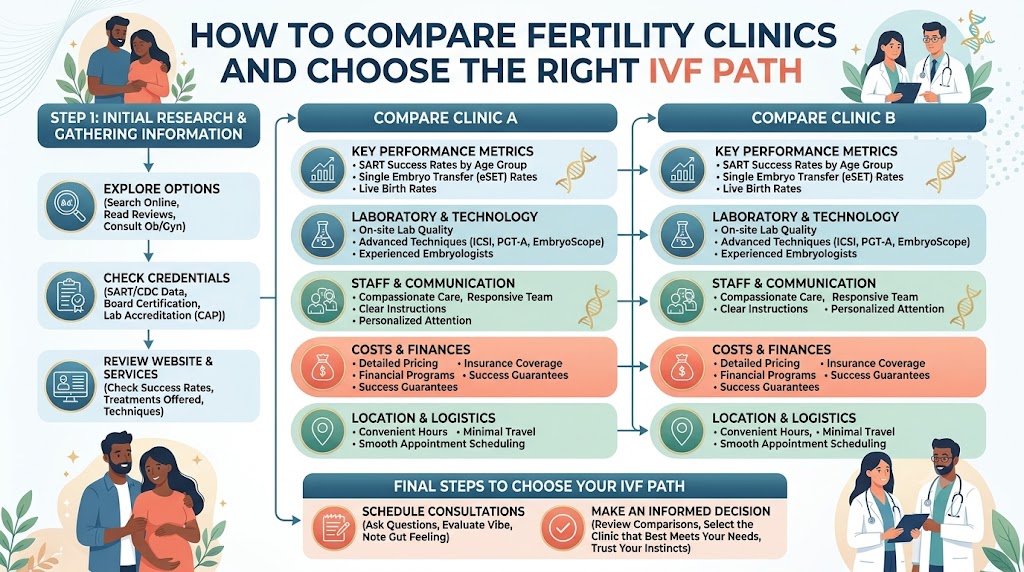
How to Compare Fertility Clinics Safely
Finding the right medical provider requires careful research and clear communication. Knowing how to compare fertility clinics ensures that you select a facility with high safety standards and transparent medical practices.
Start by looking at the qualifications and experience of the medical staff and lab directors. Check whether the clinic holds proper licensing and accreditation from recognized national health authorities.
Key Questions for Evaluating Clinics
- What qualifications and board certifications do the lead specialists hold?
- Does the facility offer specialized options like egg freezing or ICSI treatment on-site?
- Will I see the same medical team throughout my cycle?
- How does the clinic handle communication after regular office hours?
Transparent communication is a strong indicator of quality care. A reliable clinic provides clear cost estimates, explains potential medical risks, and willingly answers questions about their laboratory technology and protocols.
Realistic Expectations and IVF Success Rates
Understanding reported IVF success rates is essential for set realistic expectations. Success metrics show the likelihood of achieving pregnancy or a live birth per cycle started or per embryo transfer.
Success depends heavily on patient-specific factors, particularly age and underlying health conditions. Published clinic statistics represent historical averages across large patient groups, not a personal guarantee for individual outcomes.
Understanding Success Rate Metrics
- Pregnancy Rate vs. Live Birth Rate: A positive pregnancy test confirms implantation, but live birth rates measure completed deliveries.
- Per Cycle vs. Per Transfer: Rates calculated per egg retrieval differ from those calculated per embryo transfer.
- Age Categories: Outcomes vary by age group because egg quality naturally changes over time.
Always verify the source and reporting year of any published data. Clinics that follow standardized national reporting guidelines offer the most trustworthy figures.
Practical Questions to Ask Your Specialist
Before starting any procedures, prepare a list of clear questions for your consultation. This helps you understand your treatment pathway and eliminates confusion about fees or care steps.
Questions About Your Care Plan
- Which specific fertility treatment options suit my medical profile best?
- What is the full estimated IVF treatment cost, including required medications?
- Do my medical tests indicate a need for ICSI treatment?
- What are the options and fees for egg freezing if we have extra embryos?
Questions About Clinic Operations
- How do your published IVF success rates apply to patients in my age bracket?
- If I choose IVF abroad, how will you transfer my medical records to my local doctor?
- Are all lab tests, scans, and embryo storage included in the initial quote?
Clear answers to these questions will help you evaluate different IVF clinics and select a team that communicates openly and aligns with your needs.
Frequently Asked Questions
What factors influence the total IVF treatment cost?
Overall costs depend on prescribed medications, diagnostic blood tests, ultrasound scans, specialized lab procedures, embryo storage, and any necessary extra transfers.
How do doctors calculate IVF success rates?
Clinics calculate rates based on pregnancies or live births per cycle started, per egg retrieval, or per embryo transfer, categorized by age and health factors.
What should I look for when evaluating IVF clinics?
Check physician credentials, facility accreditations, transparent pricing structures, laboratory standards, patient communication, and reliable outcome reporting.
What is the main benefit of choosing IVF treatment over other care?
In vitro fertilization provides higher success chances for severe tubal blockage, severe male infertility, unexplained conditions, or when simpler treatments fail.
How do I safely compare fertility clinics across different countries?
Look at medical accreditation, legal standards, clear cost breakdowns, staff qualifications, language support, and how follow-up care is handled.
What is the primary financial benefit of traveling for IVF abroad?
Certain countries offer lower operational costs or medication fees, but total travel expenses, lodging, and follow-up care must be factored in.
Why is IVF cost by country so variable?
Differences stem from local healthcare laws, clinic overhead, medication regulations, staff wages, and whether treatments receive public funding support.
When is egg freezing recommended by specialists?
Doctors suggest freezing eggs to preserve fertility before medical procedures, during age-related changes, or to delay family planning for personal reasons.
What makes ICSI treatment different from standard fertilization?
Standard fertilization lets sperm enter the egg naturally in a dish, whereas this procedure injects one single sperm directly into a mature egg.
Which fertility treatment options are available before trying in vitro fertilization?
Initial choices may include lifestyle adjustments, ovulation induction drugs, or intrauterine insemination, depending on diagnostic findings and specialist advice.
Conclusion
Choosing the right path for fertility care involves learning about medical steps, setting clear budgets, and evaluating providers carefully. Understanding your options—from standard procedures to egg freezing or ICSI treatment helps you make informed decisions.
Whether you plan care locally or choose IVF abroad, focusing on accredited IVF clinics, transparent fees, and verified medical data is essential. Always consult with a qualified fertility specialist to review your medical history, discuss personalized care plans, and safely pursue your family goals.