Introduction
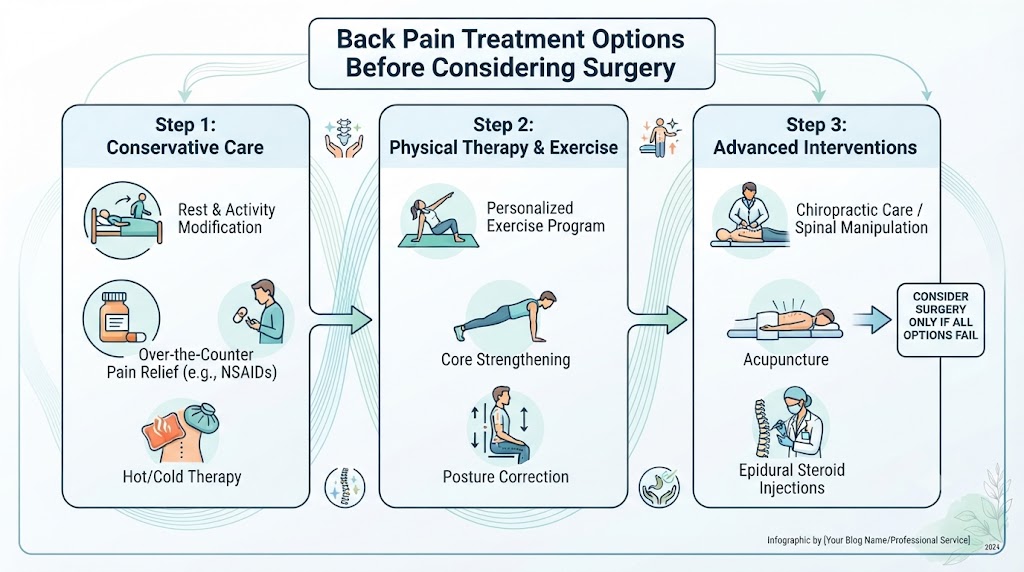
Back pain can have many causes. Some cases improve with non-surgical care, while others may need more advanced treatment. This article will briefly introduce treatment options that doctors may consider before surgery, such as activity changes, physical therapy, medicines, heat or cold therapy, lifestyle changes, injections in selected cases, and other non-surgical care. The right treatment depends on the cause, symptoms, health, and medical advice. It is important to know that treatment does not always mean surgery can be avoided. Every person is different, and medical guidance is always needed.
Why Doctors May Try Non-Surgical Treatment First
Doctors often look at many things before they suggest surgery for back pain. They want to find out what is causing the problem. They also check how bad your symptoms are and how long they have lasted.
Other factors include:
- Effect on daily activities
- Nerve symptoms
- Previous treatments
- Overall health
- Results of medical tests
The right treatment can vary from person to person. A plan that helps one person may not work the same way for another person. Doctors use this information to choose the safest and most helpful care.
Common Non-Surgical Treatment Options
There are many ways to manage back pain without an operation. Here are some common options that doctors may consider:
Physical Therapy
Guided exercises may help improve your movement, strength, and support. A physical therapist can show you safe ways to move.
Activity Changes
Changing certain daily activities may reduce stress on your back. Small shifts in how you bend or lift can make a big difference.
Heat or Cold Therapy
Heat or cold may be used for symptom relief in some cases. An ice pack or heating pad can sometimes calm sore muscles for a short time.
Medicines
Doctors may recommend certain medicines for pain or inflammation when suitable. These drugs can help reduce discomfort so you can move better. Always follow medical advice and never guess your dose.
Lifestyle Changes
Healthy habits can support your spine over time. Key areas include:
- Healthy movement
- Weight management when appropriate
- Better posture
- Safe lifting
- Regular activity
- Avoiding long periods of inactivity
Injections
Some injections may be used for selected spine or nerve conditions. These are not right for everyone, but a doctor may suggest them if other basic steps do not help.
Other Conservative Care
Doctors may also suggest other basic care options when medically appropriate. Keep explanations simple and always talk to your doctor.
How Physical Therapy May Help
Physical therapy is a big part of non-surgical care. It focuses on helping you move better and feel stronger.
Common parts of physical therapy include:
- Strength exercises
- Flexibility work
- Movement training
- Posture tips
- Core support
- Safe activity guides
- A gradual return to normal movement
Exercises should always match your specific condition. You should not perform specific exercises without professional guidance, as the wrong moves could make pain worse.
When Medicines May Be Used
Medicines may be part of treatment for some people. They are usually used to help with pain relief or to reduce inflammation. Sometimes, they help a person take part in physical therapy more comfortably.
Doctors do not give personal medicine advice here. You must follow the advice of a qualified healthcare professional. Never take strong drugs without a proper check-up.
When Injections May Be Considered
Injections may sometimes be considered when pain comes from certain spine or nerve problems. Doctors may think about them if basic care does not give relief.
They are not suitable for every patient. You should discuss the benefits and risks with your doctor. The exact type of injection depends on your specific condition and symptoms.
| Treatment Option | What It May Help With | Important Point |
|---|---|---|
| Physical therapy | Movement and strength | Should match the person’s condition |
| Activity changes | Reducing strain | Advice may vary by cause |
| Heat or cold | Short-term symptom relief | Not suitable for every situation |
| Medicines | Pain or inflammation | Use only as advised |
| Lifestyle changes | Overall back health | Results may take time |
| Injections | Some nerve or spine pain | Used only in selected cases |
When Non-Surgical Treatment May Not Be Enough
Non-surgical treatment does not work for every patient. Sometimes, a doctor may need to consider further evaluation.
Situations that may need a closer look include:
- Persistent severe pain
- Symptoms that continue despite treatment
- Worsening nerve symptoms
- Significant weakness
- Major problems with movement
- Certain structural spine problems
- Serious injury
Further testing or specialist review may be needed to find out what is wrong. This does not mean surgery is automatically required.
Warning Signs That Need Prompt Medical Care
Some back symptoms need quick medical attention. You should look out for red flags that point to serious issues.
Watch for symptoms such as:
- Sudden loss of bladder or bowel control
- Severe or increasing leg weakness
- Numbness around the inner thighs or genital area
- Severe back pain after a major injury
- Fever with severe back pain
- Severe symptoms with other concerning changes
Tell your doctor right away when these signs occur. Do not wait for them to go away on their own.
When Surgery May Be Discussed
Surgery may be considered for selected patients after a full medical assessment. Doctors do not rush into this step.
They look at factors such as:
- The cause of the problem
- Severity of symptoms
- Nerve problems
- Structural changes
- Response to other treatments
- Effect on daily life
- Overall health
Surgery is a medical decision made after a proper evaluation. It is not always the last option, and it is not always the best option for everyone.
Common Mistakes Patients Should Avoid
People often make mistakes when dealing with back pain. Avoiding these errors can help protect your health.
Common mistakes include:
- Assuming every back pain case needs surgery
- Ignoring persistent symptoms
- Stopping treatment too early without medical advice
- Trying random exercises from the internet
- Taking medicines without professional advice
- Ignoring numbness or weakness
- Delaying care after a serious injury
- Choosing treatment based only on cost
- Avoiding specialist review when symptoms continue
Keep your care safe and guided by experts.
Questions to Ask Before Considering Surgery
It is smart to ask questions when talking to your doctor.
Here are some helpful questions:
- What is causing my back pain?
- Do I need more tests?
- What non-surgical treatments are available?
- How long should I try them?
- What are the possible benefits and risks?
- Why might surgery be considered?
- Are there other treatment options?
- What could happen if I wait?
- Should I see a spine specialist?
- Would a second opinion be useful?
How to Prepare for a Spine Specialist Visit
Good preparation helps you make the most of your doctor visit.
Follow these simple tips:
- Write down your symptoms.
- Note when the pain started.
- Record what makes it better or worse.
- List current medicines.
- Bring previous reports and scans.
- Write down your questions.
- Explain any numbness or weakness.
- Tell the doctor about previous treatments.
Simple Back Pain Treatment Checklist
Use this checklist to guide your journey:
- Understand the possible cause of your pain.
- Track how long symptoms last.
- Note numbness or weakness.
- Ask about non-surgical options.
- Follow professional treatment advice.
- Keep medical reports ready.
- Ask about possible risks and benefits.
- Ask when further review is needed.
- Discuss surgery only after proper medical assessment.
FAQs
Can back pain improve without surgery? Yes, many cases of back pain improve with rest, physical therapy, and other non-surgical care.
What treatments are used before back surgery? Doctors often suggest physical therapy, activity changes, heat or cold, lifestyle shifts, and medicines first.
Can physical therapy help back pain? Yes, guided exercises can help build strength, improve flexibility, and support your spine.
When are medicines used for back pain? Medicines may be used to reduce pain or inflammation so you can move and take part in therapy.
When may injections be considered? Injections may be considered for certain nerve or spine problems when basic care is not enough.
How long should non-surgical treatment be tried? The time depends on your condition, symptoms, and what your doctor advises.
When might surgery be considered for back pain? Surgery may be considered for selected patients when non-surgical care does not help or when nerve problems are severe.
When should I see a spine specialist? You should see a specialist if your pain lasts a long time, gets worse, or comes with nerve symptoms.
Conclusion
Many back pain cases may be managed with non-surgical care. Options such as physical therapy, activity changes, medicines, lifestyle changes, selected injections, and specialist evaluation can offer great help. The right option always depends on the cause and severity of your symptoms. Surgery may be considered for some conditions after a proper evaluation. Talk openly with a qualified healthcare professional to find the best and safest path forward for your back health.