Introduction
Back pain is a very common health issue that affects many people. Most cases improve with basic care, rest, and time. However, some types of pain may need specialist attention. Certain symptoms can be a sign that a person needs faster medical review. A specialist spine hospital can provide proper specialist assessment and treatment options. Knowing when to look for extra help can make a big difference in health and recovery.
Understanding When Back Pain Needs Specialist Care
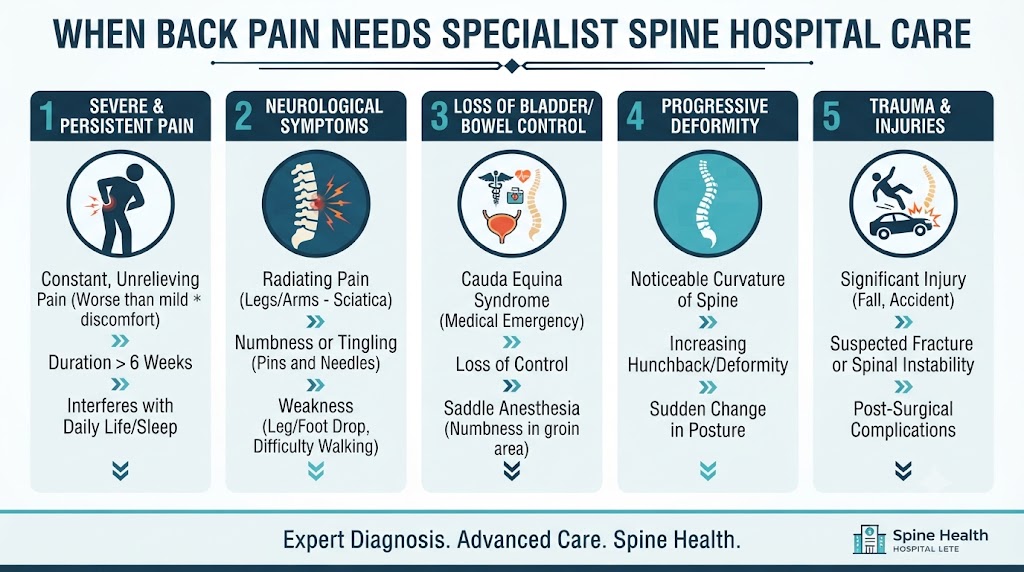
Many people feel back pain during their daily lives. Most times, the pain goes away on its own. Yet, some signs mean a person should see a spine specialist.
- Back pain that does not improve after a few weeks
- Pain that keeps getting worse instead of better
- Pain that affects daily activities like sitting or walking
- Pain that travels down into the leg or arm
- Numbness, tingling, or a “pins and needles” feeling
- Muscle weakness in the limbs
- Trouble walking, balancing, or moving normally
- Repeated episodes of back pain that keep coming back
- Pain that starts right after a sudden injury
- Severe pain that needs a medical review
Symptoms like these can have many different causes. A proper check helps find out what is really going on.
Red-Flag Symptoms That Need Urgent Care
Some signs need fast medical attention. These are often called red-flag symptoms. If a person notices these signs, they should seek urgent medical care right away.
- Sudden loss of bladder or bowel control
- Severe or quickly worsening weakness in the legs
- Numbness around the inner thighs, groin, or genital area
- Severe pain after a major injury, like a car crash or fall
- Fever with severe back pain
- Unexplained weight loss along with ongoing back pain
- Severe pain with other serious medical symptoms
These warning signs are rare, but they are very important. Prompt medical care can help protect long-term health and nerve function.
Common Spine Problems That May Need Specialist Care
Back pain can come from many different parts of the spine, such as bones, discs, nerves, or muscles. Some common conditions may lead a doctor to suggest specialist spine care.
- Herniated or slipped disc
- Spinal stenosis, which is a narrowing of the spinal canal
- Sciatica, or nerve pain running down the leg
- Degenerative disc changes linked to aging
- Spinal arthritis
- Spinal fractures from injury or weak bones
- Scoliosis or abnormal spinal curves
- Spinal infections
- Certain spinal tumors or cancer-related spine problems
Most back pain is not caused by serious diseases. Only a qualified healthcare professional can find the true cause of the problem.
Why a Specialist Spine Hospital May Help
When back pain is complex, a specialist spine hospital can offer focused care. These hospitals bring together experts and tools designed just for spine health.
- Spine specialists and back experts
- Orthopedic spine care teams
- Neurosurgical spine care professionals
- Advanced diagnostic tests
- Detailed imaging services like MRI or X-ray
- Non-surgical treatment plans
- Pain management support
- Physical rehabilitation and therapy
- Surgical care when other treatments are not enough
- Recovery and follow-up care
Treatment always depends on the exact cause and severity of the problem. Surgery is only one option and is not needed for most patients.
What Happens During a Spine Evaluation
Visiting a spine specialist involves a clear and simple process. The doctor works to understand the problem and find the best way to help.
- Medical history: The doctor asks about past health, work, and lifestyle.
- Discussion of symptoms: The patient talks about where it hurts and how long it has lasted.
- Physical examination: The doctor checks movement, strength, and reflexes.
- Review of reports: Past test results or X-rays are looked over.
- Imaging tests: New scans may be ordered if needed.
- Finding the cause: The team looks at all clues to find the likely source of pain.
- Discussing choices: The doctor talks about treatment options with the patient.
- Planning care: A clear follow-up and treatment plan is set up.
Not every patient needs every test or scan. The doctor decides what is best for each person.
Back Pain Situation Guide
| Back Pain Situation | What It May Mean | What Patients Should Consider |
|---|---|---|
| Mild pain that improves | May settle with basic care | Monitor symptoms |
| Pain that continues | May need medical review | Talk to a doctor |
| Pain spreading to the leg | May involve a nerve | Consider specialist review |
| Weakness or numbness | May need closer assessment | Seek medical advice |
| Severe pain after injury | May need urgent review | Get medical attention |
| Serious warning signs | May need urgent care | Seek prompt medical help |
When to Consider a Spine Hospital
Some situations call for care at a dedicated spine hospital rather than a standard clinic.
- Persistent symptoms that do not go away with rest
- Complex spine problems that need expert evaluation
- Nerve-related symptoms like spreading pain or numbness
- Serious injuries affecting the back or neck
- Symptoms that heavily affect movement and quality of life
- Need for specialized diagnostic testing
- Need for a surgical consultation or second opinion
- Need for coordinated spine care under one roof
- Need for structured physical rehabilitation and follow-up
Questions Patients Should Ask
Asking questions helps patients understand their health and treatment choices. Here are some useful questions to ask a doctor:
- What may be causing my back pain?
- Do I need to see a spine specialist?
- Do I need imaging tests like an MRI?
- What treatment options are available for me?
- Can non-surgical treatment help my condition?
- Do I need surgery, or are there other choices?
- What are the risks and benefits of the suggested care?
- What should I expect during my recovery?
- What follow-up care may I need?
How to Choose a Specialist Spine Hospital
Choosing the right hospital is an important step. Patients and families can look at several practical factors:
- Range of spine services offered
- Availability of qualified spine specialists
- On-site diagnostic and imaging facilities
- Variety of non-surgical and surgical treatment options
- Physical therapy and rehabilitation services
- Emergency support for sudden spine issues
- Quality and accreditation information
- Patient support and guidance programs
- Structured follow-up care plans
It is best to focus on services and quality rather than unverified claims.
Common Mistakes Patients Should Avoid
Managing back pain well means avoiding common traps that can delay healing.
- Ignoring persistent pain and hoping it goes away on its own
- Ignoring numbness, tingling, or muscle weakness
- Waiting too long to see a doctor after a serious injury
- Assuming every back problem will need surgery
- Choosing care based only on the lowest price
- Relying only on unverified online information
- Ignoring follow-up care and rehabilitation exercises
Being proactive and careful helps protect long-term back health.
Simple Back Pain Care Checklist
- Track how long the pain lasts.
- Note where the pain occurs in your back.
- Notice any numbness, tingling, or weakness.
- Note if pain spreads to your leg or arm.
- Keep past medical reports ready for your visit.
- Tell the doctor about previous injuries.
- Ask questions about your treatment options.
- Follow the recommended follow-up plan.
Frequently Asked Questions
When should I see a spine specialist for back pain? You may want to see a spine specialist if your back pain lasts for several weeks, keeps getting worse, or starts spreading into your legs or arms.
When does back pain need urgent medical care? Back pain needs urgent medical care if it comes with sudden loss of bladder or bowel control, severe leg weakness, fever, or pain after a major injury.
What symptoms may point to a spine problem? Common signs include ongoing pain, stiffness, numbness, tingling, muscle weakness, and pain that travels down the limbs.
Does every case of back pain need a spine hospital? No. Most back pain improves with basic care, rest, and simple treatments. Specialist spine hospitals are usually for complex or persistent cases.
What tests may a spine specialist use? A specialist may use a physical exam, medical history review, and imaging tests like X-rays, MRIs, or CT scans to find the cause of pain.
Can back pain be treated without surgery? Yes. Many spine problems improve with non-surgical methods such as physical therapy, lifestyle changes, medications, and targeted pain management.
When might surgery be considered for back pain? Surgery may be considered when other treatments do not work, when nerve compression causes severe weakness, or for certain structural spine problems.
How can I prepare for a spine hospital visit? Write down your symptoms, list how long the pain has lasted, bring past medical reports, and prepare a list of questions to ask the doctor.
Conclusion
Back pain has many possible causes, and most cases do not need hospital care. However, persistent, severe, or unusual symptoms may need a specialist review. Warning signs should never be ignored. A specialist spine hospital can provide the right tests, treatment choices, and follow-up care when needed. Taking the right steps early can help you feel better and protect your long-term health and movement.