Introduction
Back pain is a common health issue that can affect anyone at any age. It can start suddenly or build up slowly over time. The causes of back pain can vary widely from person to person. They can range from a simple muscle strain after lifting a heavy box to long-term posture habits or specific spine-related conditions. Understanding why your back hurts is the first step toward feeling better. Recognizing these factors helps you make informed choices about your daily habits and when to seek professional medical advice.
Why Does Back Pain Happen?
Back pain rarely happens for just one reason. The human back is a complex structure made of bones, disks, muscles, ligaments, and nerves. When one part gets irritated or overworked, pain can follow.
Pain can come from muscles, joints, bones, disks, or nerves. Daily habits, sudden injuries, and certain underlying health conditions also play a big role. Because every person’s body is different, the exact cause of discomfort can vary greatly.
Common Causes of Back Pain
Most people experience back pain at some point in their lives due to everyday physical stress. Understanding these common triggers can help you protect your spine during daily routines.
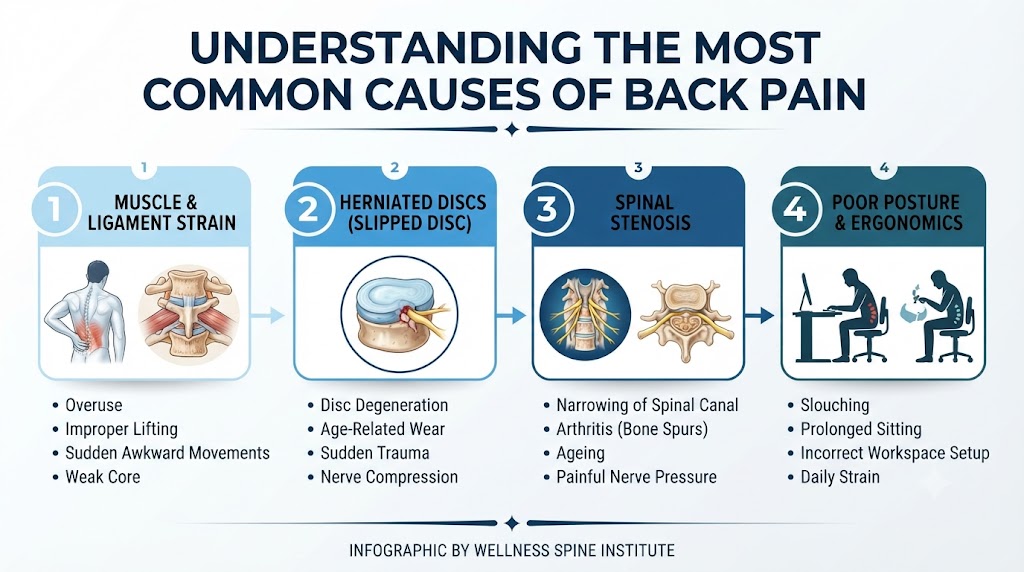
- Muscle or ligament strain: Overstretching soft tissues often happens during sudden movements.
- Poor posture: Slouching at a desk puts uneven pressure on the spine.
- Long periods of sitting: Staying still for hours stiffens back muscles and joints.
- Heavy lifting: Lifting objects incorrectly can overload the lower back.
- Sudden movement: Twisting too fast can catch the back off guard.
- Lack of regular movement: Inactive muscles lose strength and support.
- Muscle weakness: A weak core fails to protect the spine.
- Sports or exercise injuries: High-impact activities can sometimes cause sudden strains.
- Overuse: Repeating the same motion all day can irritate back tissues.
Spine-Related Conditions That May Cause Back Pain
Sometimes, back pain is linked to specific changes or issues within the spine itself. It is important to remember that not every back problem comes from a serious spine condition. However, doctors often check for these common physical issues:
- Herniated or slipped disc: A soft spinal disc may press on nearby nerves, causing discomfort or leg symptoms.
- Degenerative disc changes: Natural wear and tear over time can make discs thinner and less flexible.
- Spinal arthritis: Joint changes in the spine may cause stiffness and pain that worsens with movement.
- Spinal stenosis: The spaces inside the spine may narrow, putting pressure on the spinal cord and nerves.
- Sciatica: Pain that travels down the leg may happen when the sciatic nerve is irritated.
- Spondylolisthesis: One vertebra may slip forward over the one below it.
- Osteoporosis-related spinal fractures: Weakened bones can sometimes crack or collapse under stress.
Lifestyle Factors That May Affect Back Pain
Your everyday habits play a major part in how your back feels. While these factors do not always guarantee back pain, they may contribute to discomfort over time.
Poor sitting habits and long screen time can weaken posture and strain neck and back muscles. A lack of physical activity often leads to weak core or back muscles, leaving the spine with less support. Poor lifting habits, such as bending at the waist instead of the knees, put direct pressure on lower back joints.
Excess body weight may also add extra daily load to the spine. Additionally, a poor sleep position or an unsupportive mattress can sometimes leave you feeling stiff and sore in the morning.
| Possible Cause | Simple Explanation | Common Example |
|---|---|---|
| Muscle strain | Muscles may become overstretched or irritated | Lifting something heavy |
| Poor posture | Poor body position may place extra stress on the back | Sitting for long hours |
| Herniated disc | A spinal disc may press on nearby nerves | Back pain with leg symptoms |
| Arthritis | Joint changes may cause pain and stiffness | Pain that worsens with movement |
| Activity level | Weak muscles may provide less support | Spending most of the day sitting |
When Should Back Pain Be Taken Seriously?
Most back pain gets better with rest, gentle movement, and time. However, certain warning signs mean you should seek prompt medical attention. Do not ignore symptoms such as:
- Severe or worsening back pain that does not improve
- Back pain that starts right after a major injury or fall
- Numbness, tingling, or weakness in your legs
- Pain that spreads down one or both legs
- Trouble walking or keeping your balance
- Sudden loss of bladder or bowel control
- Fever combined with significant back pain
- Unexplained weight loss along with back discomfort
These signs may point to a more serious medical issue that needs a doctor’s evaluation.
Related Spine Care Resources
- Placeholder for spine condition guides
- Placeholder for physical therapy tips
- Placeholder for posture correction resources
How Doctors Find the Cause of Back Pain
When you visit a healthcare professional for persistent back pain, they will look for the underlying cause. They typically check your overall symptoms and review your medical history.
The doctor will perform a physical examination to check your range of motion, muscle strength, and reflexes. They may also test for nerve-related symptoms. In some cases, imaging tests like an X-ray or MRI may be ordered to get a clearer picture of your spine. Keep in mind that scans are not always needed for every routine case of back pain.
When to See a Spine Specialist
If your back pain does not go away with basic self-care, you may need to speak with a doctor or a spine specialist. Consider seeking professional guidance if you experience:
- Persistent back pain lasting more than a few weeks
- Repeated episodes of pain that keep coming back
- Numbness, weakness, or nerve-related symptoms
- Pain that regularly interferes with your daily activities
- Symptoms that do not improve with rest
The right type of care depends entirely on your specific symptoms and medical needs.
Common Mistakes People Make With Back Pain
When back pain strikes, it is easy to make choices that slow down healing. Avoiding these common mistakes can help protect your spine:
- Ignoring pain for too long instead of paying attention to what your body tells you
- Staying completely inactive in bed for days, which can weaken muscles further
- Using poor lifting techniques that put stress back on the spine
- Spending long hours in one fixed position without taking stretching breaks
- Assuming every back pain problem has the exact same cause and fix
- Self-treating with random remedies without understanding the root cause
- Ignoring warning signs like numbness or leg weakness
Simple Back Pain Awareness Checklist
- Note when the pain started
- Notice what makes the pain better or worse
- Avoid activities that clearly increase pain
- Pay attention to numbness or weakness
- Avoid heavy lifting when it worsens symptoms
- Maintain safe movement as advised by a professional
- Seek medical advice if symptoms persist or worsen
- Seek prompt care for serious warning signs
Frequently Asked Questions
What are the most common causes of back pain? The most common causes include muscle or ligament strain, poor posture, heavy lifting, sudden movements, and long periods of sitting.
Can poor posture cause back pain? Yes. Poor body position over long periods may place extra stress on the back muscles and spinal joints.
Can sitting for long hours affect the back? Yes. Staying in one position for hours can stiffen back muscles and reduce support for the spine.
Can a slipped disc cause back pain? Yes. A herniated or slipped disc may press on nearby nerves, causing local back pain or discomfort that spreads down the leg.
When should someone see a doctor for back pain? You should see a doctor if your pain is severe, does not improve with rest, or is accompanied by numbness or weakness.
Can back pain be caused by a nerve problem? Yes. Irritation or pressure on nerves, such as the sciatic nerve, can cause sharp pain, tingling, or numbness.
Does every back pain problem need an MRI? No. Doctors usually rely on physical exams and medical history first, and they order imaging tests only when medically necessary.
When should back pain be treated as an urgent problem? Back pain accompanied by a fever, unexplained weight loss, loss of bladder control, or sudden leg weakness needs urgent medical care.
Conclusion
Back pain is a complex issue that can stem from many possible sources. Common causes include muscle strains, poor daily posture, everyday habits, sudden injuries, and age-related spine conditions. While most mild discomfort improves with time and self-care, persistent or severe symptoms deserve proper medical attention. Always listen to your body and discuss concerning signs with a qualified healthcare professional to ensure you receive the right guidance for your health needs.