Introduction
Navigating urological health concerns requires clear information, reliable guidance, and access to qualified care. Whether individuals are researching symptoms, diagnostic procedures, or specialized medical interventions, understanding how the healthcare system works is essential. UrologyHospitals.com serves as an informative resource designed to help patients connect with appropriate healthcare providers, understand complex conditions, and explore available treatment paths. From routine urinary tract issues to advanced surgical interventions, finding the right medical environment ensures that patients receive accurate evaluations and structured management tailored to their individual health profiles.
Understanding Urological Healthcare and Specialist Infrastructure
Urological health encompasses the study, diagnosis, and treatment of disorders affecting the urinary tract in both men and women, as well as the male reproductive system. The organs involved—including the kidneys, ureters, bladder, and urethra—play critical roles in filtering waste, regulating fluid balance, and maintaining overall bodily homeostasis. When these systems experience dysfunction, specialized medical care becomes necessary.
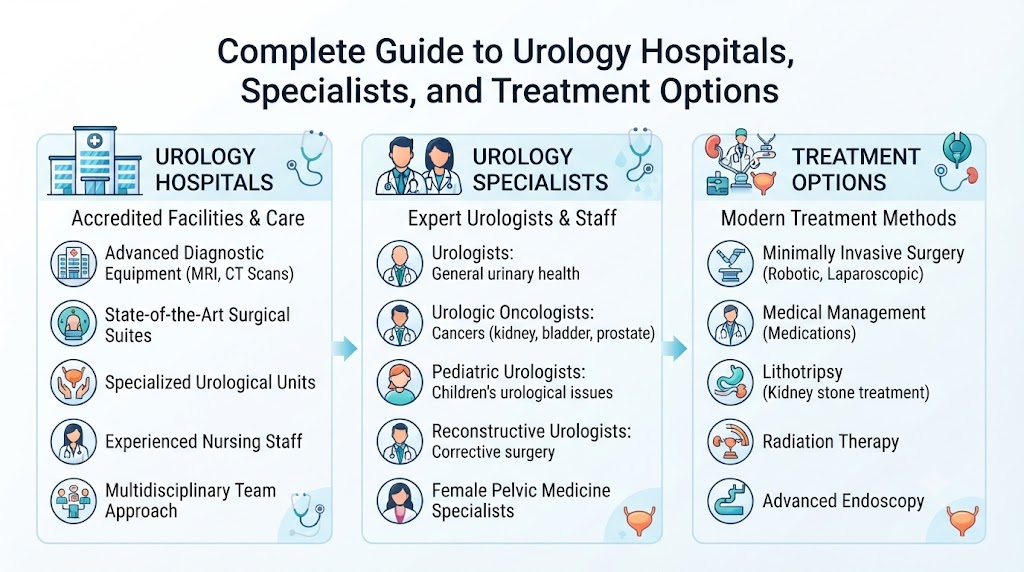
The infrastructure dedicated to this discipline includes specialized clinics, diagnostic centers, and comprehensive healthcare facilities. Patients often search for Urology Hospitals when they require specialized diagnostic equipment, multidisciplinary teams, or advanced surgical capabilities. These facilities bring together nephrologists, diagnostic technicians, and urological surgeons to provide coordinated patient care. Understanding the scope of services offered within these centers helps individuals navigate their healthcare journeys with greater confidence.
Common Symptoms and Warning Signs of Urological Conditions
Urological issues can manifest through a wide array of physical symptoms. While some signs are mild and temporary, others indicate underlying medical conditions that warrant professional evaluation. Common warning signs include:
- Persistent or sharp pain in the lower back, flank, or abdomen
- Blood in the urine (hematuria), which may appear pink, red, or brownish
- Frequent or urgent need to urinate, often disrupting sleep
- Difficulty initiating urination or a weak urinary stream
- Burning or stinging sensations during urination
- Pelvic discomfort or pressure
- Unexplained fever or chills when accompanied by urinary symptoms
It is important to note that these symptoms alone do not confirm a specific diagnosis. Similar indicators can stem from various distinct conditions, ranging from minor infections to chronic illnesses. A professional medical evaluation involving appropriate diagnostic testing is always required to identify the root cause.
Causes and Risk Factors Associated with Urological Disorders
The development of urological conditions is influenced by a combination of anatomical, genetic, lifestyle, and environmental factors. Recognizing these elements helps patients and healthcare providers better understand disease prevention and management.
- Age-related changes: Natural aging processes frequently impact prostate health, bladder control, and renal function.
- Family history: Genetic predispositions can elevate the likelihood of developing specific conditions, such as kidney stones or certain urological malignancies.
- Lifestyle habits: Inadequate hydration, high dietary sodium intake, smoking, and sedentary routines significantly contribute to urinary tract and kidney complications.
- Underlying medical conditions: Chronic illnesses like diabetes and hypertension place added stress on the vascular and renal systems, altering normal urological function.
Diagnosis and Medical Evaluation Procedures
Accurate diagnosis forms the foundation of effective Urology Treatment. When a patient consults a specialist, a structured diagnostic process is typically initiated to pinpoint the exact nature of the condition.
| Diagnostic Method | Primary Purpose | What to Expect |
| Laboratory Testing | Analyze urine and blood composition | Routine urine samples and blood panels to detect infection, inflammation, or markers of organ dysfunction. |
| Imaging Studies | Visualize internal urinary structures | Non-invasive modalities such as ultrasounds, CT scans, or MRIs to identify stones, structural abnormalities, or masses. |
| Cystoscopy | Inspect the interior lining of the bladder and urethra | Insertion of a thin, lighted tube equipped with a camera to examine urethral and bladder tissues directly. |
| Urodynamic Testing | Assess bladder storage and emptying efficiency | Specialized evaluations measuring pressure, volume, and muscle function within the lower urinary tract. |
Modern Urology Treatment Options and Approaches
Management strategies for urological disorders vary widely depending on the specific condition, its severity, and the overall health of the patient. Treatment plans are individualized after thorough specialist assessment.
Conservative Management and Observation
For many early-stage or asymptomatic conditions, healthcare providers may recommend active surveillance or watchful waiting. Lifestyle modifications, dietary adjustments, and increased fluid intake often serve as foundational steps in managing minor dysfunctions.
Pharmacological Interventions
Medications are frequently prescribed to manage symptoms, reduce inflammation, control infection, or slow the progression of chronic conditions. These may include targeted antibiotics, anti-inflammatory agents, or specialized hormone regulators.
Surgical Interventions and Advanced Procedures
When conservative measures are insufficient, surgical options may be recommended. These range from minimally invasive endoscopic procedures to complex resections. Advanced techniques, including Robotic Urology Surgery, allow specialists to perform intricate procedures with enhanced precision, smaller incisions, and reduced recovery times, though suitability depends entirely on individual clinical assessments.
The Vital Role of Urology Specialists in Patient Care
The management of complex urinary and reproductive health issues requires advanced medical expertise. Urology Specialists—commonly known as urologists—undergo rigorous training to diagnose, medical manage, and surgically treat conditions spanning the entire urinary system.
These professionals work closely with primary care physicians, radiologists, and oncologists to deliver comprehensive care. Their role extends from initial diagnostic workups to personalized treatment planning, surgical execution, and long-term post-treatment monitoring. Engaging with a qualified specialist ensures that patients receive evidence-based recommendations tailored to their unique physiological needs.
Targeted Urological Conditions and Specific Care Pathways
Kidney Stone Treatment
Kidney stones are hard mineral and salt deposits that form inside the kidneys and can cause severe pain as they travel through the urinary tract. Kidney Stone Treatment options depend largely on the size, composition, and location of the stone. While small stones may pass naturally with increased hydration and pain management, larger or obstructive stones often require medical intervention. Modern approaches include shock wave lithotripsy to break stones into smaller fragments, ureteroscopy, or minimally invasive percutaneous procedures for complex cases. Prevention strategies, including dietary modifications and lifestyle adjustments, are also emphasized during follow-up care.
Prostate Cancer Treatment
Prostate cancer is one of the most common malignancies affecting men. Prostate Cancer Treatment varies significantly based on factors such as cancer stage, grade, risk classification, overall health, and personal patient preferences. Options range from active surveillance for slow-growing, low-risk tumors to surgical removal (prostatectomy), radiation therapy, and systemic therapies. Specialists carefully evaluate each case to balance cancer control with the preservation of urinary and sexual function.
Enlarged Prostate Treatment
Benign prostatic hyperplasia (BPH), or an enlarged prostate, is a common non-cancerous condition in aging men that can obstruct urine flow. Enlarged Prostate Treatment focuses on alleviating bothersome lower urinary tract symptoms. Management strategies begin with lifestyle changes and monitoring, progressing to medications that relax prostate tissues or shrink the gland. When medication is inadequate, minimally invasive therapies or surgical options may be considered to restore normal urinary flow.
Urinary Tract Infection Treatment
Urinary tract infections (UTIs) occur when microorganisms invade the urinary system, leading to inflammation and discomfort. Urinary Tract Infection Treatment primarily involves targeted antibiotic therapy determined by urinalysis and culture results. For patients experiencing recurrent infections, specialists investigate underlying anatomical or functional factors to develop long-term preventive strategies and reduce the frequency of future episodes.
Bladder Cancer Treatment
Bladder cancer involves the abnormal growth of cells within the bladder lining. Bladder Cancer Treatment is guided by the stage and depth of tumor invasion. Initial management often involves transurethral resection to remove local growths, sometimes followed by intravesical therapy administered directly into the bladder. For more advanced cases, partial or radical cystectomy combined with systemic therapies may be necessary, always supported by structured post-treatment monitoring.
Robotic Urology Surgery: Precision and Recovery
Technological advancements have transformed modern surgical intervention. Robotic Urology Surgery utilizes console-controlled robotic arms that provide high-definition, three-dimensional visualization and exceptional instrument articulation. This approach is frequently utilized in complex procedures such as prostatectomies, partial nephrectomies, and reconstructive urinary tract surgeries. While robotic assistance offers benefits such as enhanced precision and potentially shorter hospital stays, it is not universally required for every procedure. Specialist judgment determines whether an open, laparoscopic, or robotic approach is most appropriate for a given patient.
Choosing the Right Urology Hospital and Specialist
Selecting an appropriate healthcare facility and finding a qualified practitioner are critical steps in achieving positive health outcomes.
Factors in Hospital Selection
When evaluating healthcare facilities, patients and their families should consider several practical aspects:
- Availability of comprehensive diagnostic imaging and laboratory services
- Expertise and experience of the medical staff in performing specific urological procedures
- Presence of multidisciplinary care teams capable of managing complex conditions
- Standards of patient safety, infection control, and post-operative support infrastructure
Finding Care Locally
For patients seeking ongoing management or consultations, locating a practitioner nearby is often a priority. Identifying a Urologist Near Me involves verifying professional board certifications, hospital affiliations, and areas of clinical focus. Utilizing resources like UrologyHospitals.com allows individuals to explore credentialed providers and make informed decisions regarding their medical care.
Practical Patient Guidance: Consultations and Questions
Preparing for a urology consultation helps ensure that patients make the most of their time with a specialist.
Preparing for Your Visit
- Compile a chronological timeline of symptoms and when they first appeared.
- Bring a complete list of current medications, supplements, and previous medical records.
- Gather reports from recent diagnostic tests, lab work, or imaging studies.
- Write down specific questions or concerns to discuss during the appointment.
Questions to Ask Your Urologist
- What is the specific diagnosis causing my symptoms?
- What additional diagnostic tests, if any, are necessary?
- What are the potential treatment options available for my condition?
- What are the expected benefits, risks, and potential side effects of each treatment option?
- What does the recovery process entail, and what lifestyle adjustments should I anticipate?
- Are there warning signs or symptoms that should prompt me to seek urgent medical attention?
When to Seek Urgent Medical Attention
While many urological conditions are chronic or managed through routine outpatient care, certain situations require immediate medical evaluation. Patients should seek prompt emergency care if they experience:
- Complete inability to urinate (acute urinary retention)
- Severe, unrelenting flank or abdominal pain accompanied by persistent vomiting
- Gross hematuria (visible heavy bleeding in the urine) accompanied by large blood clots
- High fever, chills, and rigors occurring alongside urinary symptoms
Frequently Asked Questions
What conditions do urologists treat?
Urologists diagnose and treat conditions affecting the urinary tract in both men and women, including the kidneys, bladder, ureters, and urethra, as well as the male reproductive system.
How do I know if I need to see a urologist?
A primary care physician may refer you to a urologist if you experience persistent urinary symptoms, blood in your urine, chronic pelvic pain, recurrent infections, or abnormal diagnostic findings.
Are all kidney stones treated with surgery?
No. Treatment depends on the size, location, and composition of the stone. Many small stones pass naturally with increased hydration and medical management, while larger or obstructive stones require intervention.
What is the difference between an enlarged prostate and prostate cancer?
An enlarged prostate (BPH) is a non-cancerous increase in the size of the gland common with aging, whereas prostate cancer involves malignant cellular growth. They are distinct medical conditions with different management pathways.
How is robotic urology surgery performed?
Robotic surgery involves a surgeon operating specialized robotic instruments via a console, providing enhanced visualization and precision during complex procedures like prostate or kidney surgeries.
What should I bring to my first urology appointment?
You should bring a list of symptoms, current medications, previous medical history, relevant imaging or lab reports, and a list of questions for the specialist.
Can urinary tract infections resolve without treatment?
While mild symptoms may occasionally fluctuate, bacterial urinary tract infections generally require professional medical evaluation and appropriate antibiotic therapy to prevent complications.
How can I find a verified urology specialist?
Patients can research specialists through accredited medical boards, hospital directory listings, and structured healthcare information resources like UrologyHospitals.com to find qualified professionals.
Conclusion
Understanding urological health and navigating treatment options requires reliable information, careful evaluation, and guidance from qualified professionals. From recognizing initial symptoms and undergoing appropriate diagnostic testing to exploring specialized treatment paths, a structured approach ensures optimal patient care. Resources such as UrologyHospitals.com assist individuals in connecting with knowledgeable specialists and healthcare facilities suited to their specific medical needs. If you or someone you know is experiencing persistent, severe, or concerning urological symptoms, consult a qualified healthcare professional for a comprehensive evaluation and personalized care plan.