Neurological diseases are among the most complex and life-impacting health conditions globally. From memory loss and chronic headaches to movement disorders and seizures, these illnesses affect millions of lives every year. Early detection, accurate diagnosis, and appropriate treatment — including surgery when necessary — can dramatically improve quality of life.
This in-depth tutorial on neurological diseases symptoms causes treatment surgery is crafted for patients, caregivers, medical tourists, and readers seeking trustworthy medical guidance.
Understanding Neurological Diseases: What Makes Them Unique
Neurological diseases affect the brain, spinal cord, and peripheral nerves — the very systems responsible for thought, movement, sensation, and coordination. Because the nervous system controls nearly every function of the body, neurological disorders often have widespread effects.
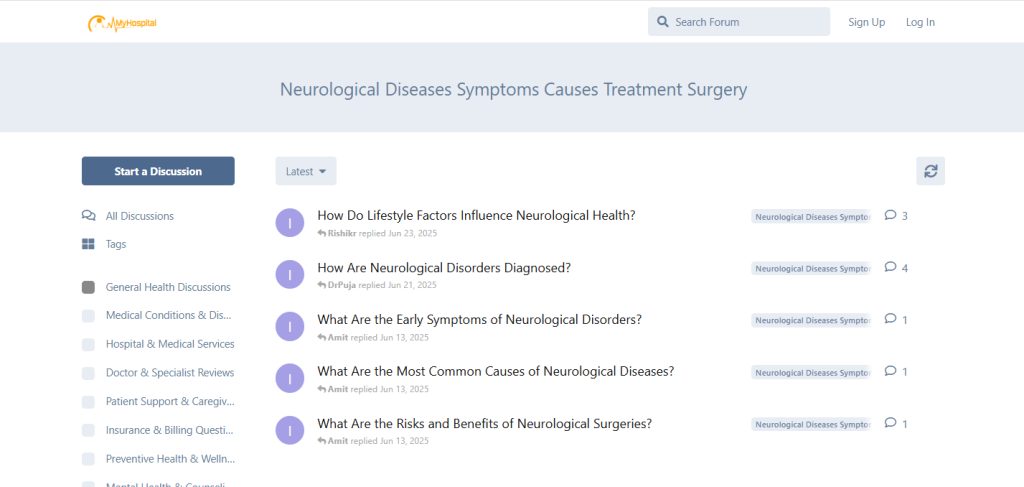
On MyHospitalNow, patients actively explore their symptoms, treatment options, and surgical decisions within the neurological diseases discussion space, helping others interpret complex medical information in everyday language.
Common Symptoms of Neurological Conditions
While each disorder can present differently, there are shared symptoms that should raise concern:
Typical Early Signs
- Frequent headaches or migraines
- Numbness or tingling in limbs
- Unexplained muscle weakness
- Vision changes
- Persistent dizziness
- Memory problems
- Difficulty concentrating or thinking clearly
Advanced Symptoms to Watch For
- Seizures or sudden loss of consciousness
- Severe coordination or balance problems
- Slurred speech
- Loss of bladder or bowel control
- Paralysis in any body part
These warning signs, when persistent, warrant medical evaluation. Many patients begin by sharing their concerns and reading similar experiences on MyHospitalNow’s neurological forum to understand what others have encountered before visiting a doctor.
What Causes Neurological Diseases?
Neurological disorders arise from a variety of underlying causes. Understanding these helps patients and families recognize risk factors and take preventive measures.
Common Causes
- Genetic Factors
Certain neurological conditions — like Huntington’s disease and some forms of epilepsy — have a genetic basis. - Infections & Inflammation
Viral or bacterial infections affecting the brain (like meningitis) can lead to long-term neurological damage. - Autoimmune Disorders
Conditions such as multiple sclerosis cause the immune system to attack nerve tissues. - Trauma & Injury
Head injuries from accidents are common causes of long-term nerve and brain damage. - Vascular Problems
Stroke, aneurysms, and blood clotting issues disrupt normal blood flow to the brain. - Degenerative Diseases
Disorders like Parkinson’s and Alzheimer’s progressively damage nerve cells over time.
Recognizing whether symptoms are sudden or gradual helps doctors determine the likely root cause — a critical step toward effective treatment.
Real Patient Story: From Confusion to Clarity
A 53-year-old man began experiencing frequent falls and increasing memory difficulty. Initially dismissed as stress, his symptoms worsened over months. After engaging with the neurological diseases discussion on MyHospitalNow, he learned which signs are medically serious. Prompt medical testing revealed early-stage Parkinson’s disease. With medication, therapy, and lifestyle adjustments, his quality of life significantly improved.
His experience underscores the importance of knowledge, early medical consultation, and community support — all of which are central to the patient discussions on MyHospitalNow.
Diagnosis: How Neurological Diseases Are Evaluated
Diagnosing neurological disorders requires careful assessment:
Common Diagnostic Tools
- Neurological exam: Reflex testing, strength, coordination
- Imaging scans: MRI, CT, PET scans
- Electrodiagnostic tests: EEG, EMG
- Blood tests: To rule out metabolic or infectious causes
- Lumbar puncture (spinal tap): For cerebrospinal fluid analysis
A detailed diagnostic approach helps differentiate between conditions with similar symptoms, ensuring patients receive the right treatment plan.
Treatment Options: Medication, Therapy & Support
Not all neurological conditions require surgery. Many can be effectively managed with the right combination of medical therapy and lifestyle support.
Non-Surgical Treatment Approaches
- Medications: Anticonvulsants, dopamine regulators, nerve pain relievers
- Physical therapy: Crucial for movement disorders and rehabilitation
- Occupational therapy: Helps improve daily function
- Speech therapy: For communication and swallowing issues
- Lifestyle modifications: Diet, exercise, sleep regulation
- Psychological support: Counseling for emotional well-being
The neurological disease discussions on MyHospitalNow help patients understand which therapies are most often recommended for specific symptoms, enabling more informed conversations with healthcare providers.
When Is Surgery Needed?
Surgery is considered when structural problems exist or when medical therapy alone is insufficient.
Common Neurological Surgeries
- Brain tumor removal
- Deep brain stimulation (DBS) for Parkinson’s disease
- Spinal decompression
- Epilepsy surgery
- Ventriculoperitoneal (VP) shunt for hydrocephalus
- Microvascular decompression
Surgical decisions depend on disease type, severity, age, overall health, and expected outcomes. Many patients share their pre- and post-surgery experiences on MyHospitalNow to help others set realistic expectations.
Recovery and Rehabilitation
Recovery varies with the condition and procedure but generally includes:
- Post-surgical follow-up care
- Physical and occupational therapy
- Medication adjustments
- Regular neurologist check-ups
- Lifestyle support and community engagement
Rehabilitation is often a marathon, not a sprint — and patient conversations on the forum often reflect how ongoing support accelerates recovery.
Hospital Comparison Table (For Patient Awareness)
| Hospital Name | Beds | Neurology Specialties | Neurosurgery Unit | Doctors | ICU |
|---|---|---|---|---|---|
| NeuroCare Institute | 900 | Brain & Nerve Disorders | Yes | 260+ | Yes |
| Central Neurology Hospital | 750 | Stroke, Epilepsy | Yes | 200+ | Yes |
| Apex Brain Center | 800 | Movement Disorders | Yes | 220+ | Yes |
| Harmony Neuro Clinic | 500 | Memory & Cognition | No | 150+ | Yes |
| Global Neuro Hub | 850 | Multi-Neurology | Yes | 280+ | Yes |
| Lifeline Neuro Hospital | 700 | Pediatric & Adult Neuro | Yes | 230+ | Yes |
| Prime Neuro Institute | 640 | Neurodegeneration | Yes | 180+ | Yes |
| Sunrise Neurology | 580 | Headache & Pain | No | 150+ | Yes |
| Unity Neuro & Spine | 820 | Spine & Brain | Yes | 240+ | Yes |
| Metro Brain Center | 770 | Neurosurgical Care | Yes | 260+ | Yes |
This comparison aids general understanding and patient planning.
Why Patients Trust MyHospitalNow
Patients consistently choose MyHospitalNow as a reliable source of medical insight because:
- Information is explained in everyday language
- Forum discussions cover real patient stories
- Guidance helps patients talk confidently with doctors
- Many contributors are caregivers and long-term survivors
One patient wrote that the forum helped them “understand my disease clearly instead of being scared by medical terms.”
Frequently Asked Questions (FAQs)
- Can neurological diseases be prevented?
Some can, through healthy lifestyle, disease management, and early medical evaluation. - Do all neurological disorders require surgery?
No — many are treated medically or with therapy alone. - How long do treatments usually last?
Depends on condition and response to therapy. - Are neurological diseases hereditary?
Some have genetic links — consult a specialist if family history exists. - Can stress worsen neurological symptoms?
Yes — stress management is important. - Is recovery possible after neurological surgery?
Many patients improve substantially with proper care. - What specialists treat neurological diseases?
Neurologists and neurosurgeons. - Is physical therapy helpful?
Very much — especially for movement and coordination issues. - Are children affected by neurological diseases?
Yes — pediatric neurology is a specialized field. - Where can patients ask questions and share experiences?
In the active neurological discussions on the MyHospitalNow forum.
Final Thoughts: Take Action with Knowledge and Support
Neurological diseases can be complex and intimidating. But informed understanding, timely medical care, and community support make all the difference. Whether it’s recognizing early symptoms, considering treatment options, or evaluating surgery, leaning on reliable medical insight empowers patients and families.
For focused discussions, real experiences, and expert guidance on neurological diseases symptoms, causes, treatment, and surgery, join the conversation on the neurological diseases topic at MyHospitalNow and connect with others navigating the same journey.